Hans Berger was the first person to detect alpha brain waves in the human scalp using an electroencephalogram. He had such confidence in his discoveries that he attempted to use them to manifest telepathy.
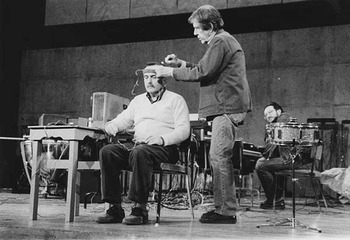
One of the first successful attempts to interface brain activity with an external receiver was achieved in 1965 by Alvin Lucier, who fed alpha waves from an electroencephalogram through a loudspeaker, vibrating percussion instruments and creating sound.
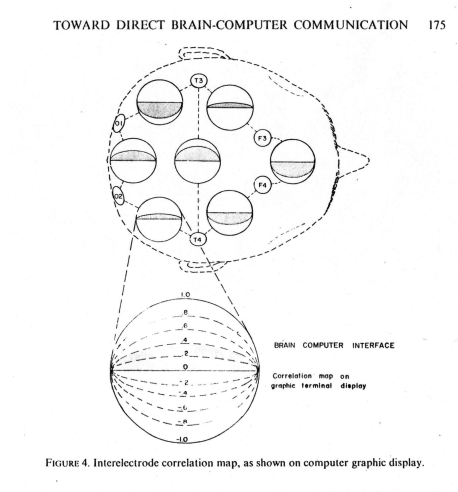
The term “Brain-Computer Interface” was first used by a Belgian researcher, Jacques J. Vidal, in a 1977 paper describing the technology utilizing brain signals to communicate with machines. His experiment applied a stimulus to a subject, such as a flash of light in the eyes or a tap on the shoulder, and this would produce a change in their electroencephalogram reading, which could then be used to move a cursor on a screen.
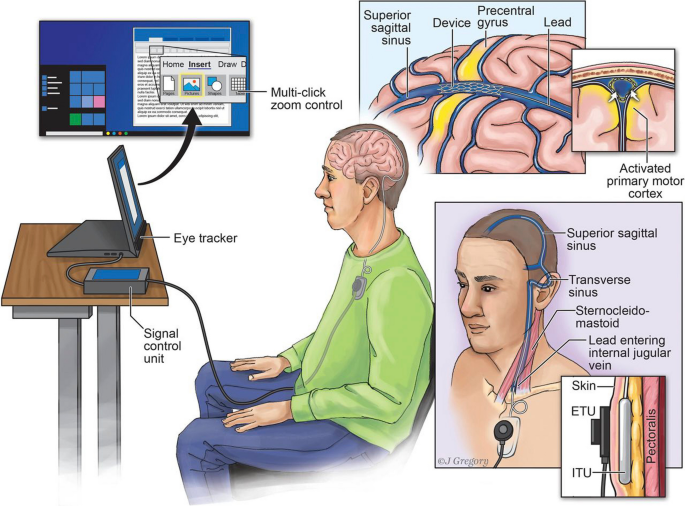
In 2012, researchers found a plausible connection between brain activity and the function of limbs and appendages. This implies a possibility of using BCI technology to either restore the function of paralyzed limbs and appendages or enable direct neural control of prosthetics.